Wednesday, April 29, 2015

Dell Debuts New PowerEdge R930 Server for Enterprise Workloads

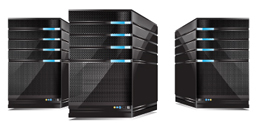
Dell recently debuted its PowerEdge R930, an enterprise application of its PowerEdge server lineup. This new launch is a part of Dell's attempt at capturing more workloads, including analytics. The R930 is specifically aimed at the traditional enterprise running workloads, like enterprise and customer relationship management applications from Oracle and SAP.

Executive Director of Dell Server Solutions Brian Payne stated that the server replacement cycle will take around three to five years. However, Payne argues that performance improvements from Dell along with configurations and preintegrated applications from Cloudera, SAP HANA and Oracle should convince enterprises to upgrade. "The aim is to be future read," Payne adds.

Other enterprise vendors, like IBM, have already moved away from the x86 server market as a commodity business but Dell is arguing that this type of server is taking UNIX workloads. Sure there's still the cloud but Payne believes that there will be growth in hybrid data centers.

The PowerEdge R930 is as follows:

  • 22% improvement on the SAP SD 2-Tier benchmark for a four-socket server
  • 6TB of memory in 96 DIMMs
  • 24 internal hard drives and support for SSD or hard drives
  • Automation, reliability and availability  features and software
In addition to that, Dell has also pre-engineered appliances based on the PowerEdge R930. Payne noted that the majority customers buy the standard R9309. Dell has also updated the PowerEdge VRTX and PowerEdge M1000e converged systems.

Dell also announced the PowerEdge FC830 and M830 blade servers. These servers are designed for database, technical computing and virtualization. The FC830 and M830 both run up to 3TB of memory and up to 72 processing cores for the Intel Xeon E5-4600 v3 processors.

Dell hasn't listed any pricing or availability for the new systems but noted that integrated systems based on the PowerEdge R930 will be available later this year.

Content originally published here

Wednesday, November 19, 2014

Serious Vulnerability To Virtualized Servers Discovered In Xen Project


The Xen Project has revealed last month a lot of details on a serious vulnerability in the Xen hypervisor, one that could put the security of a lot of virtualized servers at risk. Xen is a free, open-source hypervisor that is used to create and run virtual machines and is widely used by providers of cloud computing and virtual private server hosting companies.

The security vulnerability forced Amazon Web Services and Rackspace to reboot some of their customer's virtualized servers when it was discovered. Amazon and Rackspace were among some of the major cloud providers that Xen disclosed the vulnerability to, which is being tracked as CVE-2014-7188.

Do you have a server migration project? Get a server rental fast.

This vulnerability allows a virtual machine created using Xen's hardware-assisted virtualization (HVM) to read data that is stored by other HVM guests sharing the same physical hardware. This vulnerability breaks a crucial security barrier in multi-tenant virtual environments. A malicious HVM guest could exploit the vulnerability to crash the host server, according to a security advisory published by the Xen Project.

The vulnerability only affects Xen running on x86 systems and does not affect ARM or servers virtualized with Xen's paravirtualization (PV) mode instead of HVM. Regardless, the issue is likely to affect a very large number of servers. Amazon was forced to reboot nearly 10% of its Elastic Cloud Computer (EC2) servers and a similar effort from Rackspace affected a quarter of its 200,000 customers.

Amazon scheduled a zone by zone reboot so that they didn't affect two regions or availability zones at the same time. According to a statement released by the company, "The zone by zone reboots were completed as planned and we worked very closely with our customers to ensure that the reboots went smoothly for them."

Rackspace was not as fortunate as Amazon in its process to fix the issue. Taylor Rhodes, CEO of Rackspace, sent out an email to customers about the vulnerability and Rackspace's efforts to correct it and in it stated that the company "dropped a few balls" in the process. "Some of our reboots, for example, took much longer than they should and some of our notifications were not as clear as they should have been. We are making changes to address those mistakes," Rhodes stated.

The problems with this seem to have been fixed but you can be sure that the Xen Project is still working on making sure that something like this doesn't happen again.

Friday, October 31, 2014

Cloud Computing Is Changing The Way That We Use Servers

There are not too many people out there who are familiar with virtual servers. To many people that even know what a server is, they view it as a large tower of green lights that holds all your Word documents and Excel spreadsheets. Many companies will use their own personal servers so that everyone who is connected to those servers can access company data and files. It's one of the sure fire ways to help keep company and personal data safe. Think of the servers that a company uses as massive storage decks. They're able to back up all of their files on these servers, store data, and access whatever file or project they might need to access all from the servers. The only thing is that we are becoming more digital. We are starting to digitize many of our services. Sending mail and letters turned into Email and texting. Now, our servers are becoming more digital because of cloud computing.

What Is Cloud Computing?
Cloud Computing is a very hard term to define. It all comes down to what you feel the "Cloud" is. There are many who find it to be anything you can get on a virtual server over the internet. There are others who think that it's another fancy term for whatever consumable content you can find on the internet. Neither of these answers are wrong, necessarily. Cloud computing is also referred to in a more commercial view point. It is thought that it can be defined as "encompassing any subscription-based or pay-per-use service that, in real time over the internet, extends IT's existing capabilities." Essentially, anything that has a separate virtual server for it's services or applications that you have to access via the service's provider can be considered cloud computing.

What's The Difference Between Them?
It may not seem like there is too much of a difference between the two different servers (virtual and real), and in a way there isn't. They are both there to hold specific data programmed by the IT specialists that work for that specific service or company. One is physical and the other is accessed over the internet. Take utility computing for example. This concept might not be "new", but its slowly becoming more cloud integrated. Many larger companies, like Amazon, are seeing to it that that happens. While it may not be used for anything pertaining to how the service or application operates, it can help add more capacity for the site to run smoothly and even allow for more storage space. The fact is that instead of IT needing to go down to the server room to get to the server and fix or alter something, cloud computing makes it easier because they can just access the networks virtual server to alter what they need to alter.

It's On The Rise
Cloud computing is slowly beginning to take off as time goes by. Software is being offered as a service through virtual servers. It's gotten to the point now that even development environments are being offered as services through servers. There are restrictions though. The application that's being developed is based off of the infrastructure of the provider. Your app's service is then delivered to the users via the provider's internet as well. All of these services are being offered through virtual servers as it's easier for IT to make changes and help. Some even view it as more cost effective. If companies can offer services to develop, deliver, and access services and applications via a cloud server, that only means that it's becoming more popular than people think.

Now just because we are getting more virtual with our servers doesn't mean that it's still the safest route to go. Having our services and apps become more easily accessible is a plus, but that also means that it can be more easily hacked if certain precautions aren't taken.

One thing is for sure though, there is a lot more to cloud computing and cloud technology that backing up your music on iCloud.

Need A Server Rental For Your Next Cloud Computing Project? Try www.Rentacomputer.com

Source.

Wednesday, September 24, 2014

Intel Introduces Skylake Chips For PCs And Tablets, Sets Pace For Wireless Desktops

Intel recently demoed the first PC running a next-generation chip based on the new Skylake architecture. Skylake is set to hit PCs and tablets in the second half of 2015. A desktop PC with the chip was recently shown off by Intel running 4K video during an on-stage demonstration that the Intel Developer Forum in San Francisco. According to General Manager of Intel's PC Client Group Kirk Skaugen, "You should expect a significant increase in performance, battery life and power efficiency."


Processors based on the Skylake architecture will take the place over the chips based on the Boradwell architecture, which has been delayed following issues with the manufacturer. Broadwell was introduced in Core M chips recently and is the fifth-generation of Core chips focused on tablets. The chip architecture itself is expected to be in mainstream desktops and laptops in the first half of 2015 as well.

Skylake's release date was questioned recently due to the announcement of the Broadwell delay. Skaugen was speaking with a lot of confidence about Skylake and its release and tried to stamp out any rumors and doubts about the architecture's release. In addition to that, Skaugen also stressed that the chip will be in desktops, laptops and tablets by the end of 2015. In addition to that, the Skylake chips will be made using the 14nm process, which is the same one Broadwell uses, though Skylake will have an all new chip design.

Skylake will also set the tone for wire-free computing on PCs, according to Skaugen. Intel will provide a reference platform that is based on the chip, which could reduce cable clutter in both PCs and tablets. Sakugen said that the overall goal is to enable wireless charging and data streaming between PCs and peripherals.

The reference design has a need for a laptop on a dock in order to enable wireless charging. Intel is making a dock that is based on WiGig wireless technology. WiGig is three times faster than WFi 802.11ac. This will allows PCs to stream data wirelessly to monitors and exchange date with external storage devices. In addition to that, the new tech could reduce the need for ports like DisplayPort, HDMI and USB 3.0 in PCs.

Wireless tech is certainly making waves, though there are still limitations that are struggling to catch on. Wireless charging is doing some nice things but it still isn't quite ready to catch on. The thought of having a completely wireless desktop setup sure is sweet, however. Wireless peripherals are already popular but having wireless speakers and monitors would just be so convenient. We'll see how this new Skylake architecture takes off when it is in widespread use next year.

Thursday, August 28, 2014

Server Sales Pass Go! Collects $200 As The Market Sees Turnaround

According to a recent report from IDC, server sales are on the up and up, which is great news due to the extremely slow sales figures that have plagued the market recently. In addition to that, IDC also claims that server sales are likely to stay on the increase well into 2015 and beyond.

Growth last quarter was minimal with worldwide server revenue increasing only 2.5% from the previous year. The news of an increase in sales will be welcome news to server makers as they have faced five consecutive quarters of server sales decline. In addition to that, server markers are also benefiting from the start of a cyclical refresh cycle. According to IDC, customers are now starting to replace systems that they employed soon after the financial crisis.

However, there are other factors at work as well, says IDC Analyst Kuba Stolarski. According to Stolarski, sales of x86 servers have been strong for quite a while and have been increased by companies like Google and Facebook that are building out their massive infrastructures. On the higher end of the market, sales of Unix and mainframe systems, which are traditionally more expensive, have been in decline which has also slowed down the overall market. The good news here is that these products make up a small enough part of the market that x86 gains are able to make a positive influence.

Moreover, sales of anew midrange server system, converged infrastructure products sold by companies like Cisco and VCE, have been increasing and contributing to overall growth. This has also allowed the server market to show some growth in the April-June quarter. Factory revenue across the globe also reached $12.6 billion, an increase from $12.3 billion last quarter. In addition to that, two upcoming developments also mean growth should continue and accelerate, according to IDC.

One of these developments is the release of servers based on Intel's Grantley Xeon server platform. These servers are expected to debut at Intel's developer conference in San Francisco next month. In most cases, a new chip typically spurs a new wave of server purchases. Still a long ways out of development, Microsoft is planning on ending support next year for its Windows Server 2003 OS. This product is very widely used so the discontinuation of it should prompt more people to upgrade.

Whether You Need A Short-Term Rental, Or Long-Term Lease, Our Agents Can Get You The Right Kind Of Server For Your Storage Needs--www.Rentacomputer.com 800-736-8772

Stolarski warns, however, that anybody expecting Microsoft's server business to experience the same thing its operating system business did with Windows XP shouldn't get their hopes up. This transition, Stolarski says, will be slower and some customers will most likely keep their existing hardware and simply upgrade their operating system.

The server market overall saw HP leading the pack once again with 25.4% of revenue, a slight increase over last year. Cisco had the biggest increase overall, expanding its revenue 35.4%. The company still has a small share overall at only 4.4%, though IDC notes that it took joint fourth place in the market with Oracle, who also saw a slight increase in sales. IBM was on the opposite side of the spectrum. The company is in the process of selling its x86 server business to Lenovo and also saw its sales drop 10%. Dell, which recently became a private company, also saw a decrease in sales of 6.5%.

Even though some companies experienced decline, the server market as a whole is looking up. With things reaching the end of their life users will be looking, if not forced, to upgrade to new systems. Servers based on Intel's Grantley Xeon server platform should be a great stepping stone in spurring a nice refresh for the server industry as a whole.

Tuesday, July 29, 2014

Haswell Microarchitecture Coming to Intel Xeon E5 Chips

Two weeks ago Intel began shipping Xeon E5 chips that were based on the Haswell microarchitecture to server makers with the chip planned to be in servers by this quarter. The Xeon E5 chips usually go into two-socket and four-socket servers and are the biggest-selling server products for Intel. The new chips, dubbed Grantley, are succeeding the former Romley chips based on the Ivy Bridge microarchitecture.

Lenovo has already announced plans to launch a brand new line of servers based on Grantley this quarter and server makers, including HP and Dell, have also started using Intel's server chips and could announce products in the near future. According to Intel CEO Brian Krzanich during an earnings call, "We think ... it's going to be a very powerful product."

The Grantley chips have actually already started shipping to cloud and high-performance computing customers that build their own computing gear according to Krzanich. Most of the chips developed ship out of the factory directly to server makers, who then test the chips, design servers and then make products commercially available.

The Xeon E5 chips account for nearly 75% of all of Intel's server chip shipments according to Dean McCarron, principal analyst for Mercury Research. The Romley chips are still out in the market, though Grantley will take over as customers begin to upgrade their servers. At the moment, the server business at Intel is booming, though Krzanich was aloof when asked about the expectations for the server chip.

Server Rentals Are Available From www.Rentacomputer.com Call 800-736-8772

According to Krzanich, the data-center volumes are "lumpy" and Xeon E5 order sizes could vary as companies look to upgrade data centers. "They tend to come in big pieces," Krzanich stated. However, the chip will continue to drive Intel's data-center business in the long term, at least as far as Krzanich is concerned.

The Grantley chip will have DDR4 memory controllers along with memory DIMMs that are expected to be available from Micron, Kingston and others this quarter. In addition to that, these chips will have more processing cores than the previous models. Grantley could see some competition from Advanced Micro Devices' Opteron 4000 and 6000 x86 server chips. Intel has nearly 95% of the market share, which is even higher in the Xeon E5 segment according to McCarron. "There's really not a lot of competition for that particular server product," he added.

AMD is literally betting the entire future of its server business Arm processors, which could very well emerge as competition to Intel's x86 server chips. Intel has also noted that it would be willing to customize chips with specific features though the majority of Grantley chips will not be custom McCarron added. Moreover, Intel also sells Xeon E3 chips for single-socket servers and E7 chips for servers with four or more sockets so I think it's pretty safe to say that Intel has a lockdown on this market for the time being.

Wednesday, July 2, 2014

Nvidia Replaces 64-bit Denver Chip With Server Development

Nvidia was previously planning on developing a 64-bit CPU processor but, according to recent reports from the company, has decided to abandon that project for servers. To make matters worse, this announcement comes just three years after the company promised that it would build such a chip. According to Vice President of Accelerated Computing at Nvidia Ian Buck, "That's not something we're doing today." Instead the company is focusing its latest 64-bit Tegra chips on mobile and embedded devices, according to Buck.

Back in 2011, Nvidia announced that it would be creating a 64-bit ARM-based chip named Project Denver. The chip was slated to go into mobile devices, PCs and servers. Nvidia stated that it was looking to pair Tegra chips with GPUs in servers, though those plans have yet to come to fruition. The company's latest Tegra K1 chip, which includes a 64-bit CPU and is slated to ship later this year, was created for smartphones, tablets, cars and other products.

Nvidia has previously stated that the mobile K1 chips could very well make their way into microservers, though the company will not be developing a specialized server CPU. Moreover, Nvidia's departure from this field only leaves four ARM server chip makers left: Advanced Micro Devices, AppliedMicro, Broadcom and Cavium. Nvidia has always been known for its graphics cards but has instead shifted focus to building Tesla high-performance GPUs for ARM servers. "We should continue to focus on building great GPUs for them," Buck added.

The interest in ARM servers has rapidly been growing for web hosting and cloud computing in addition to being a low-power alternative to the dominant x86 servers. However, there is also some doubt surrounding ARM servers, especially do to the fact that they are still being tested. In addition to that, the platform software has yet to fully mature and ARM server pioneer Calxeda shut down late last year due to a lack of funds. As a result, a lot of questions were raised about the viability of the products themselves.

AMD is betting its future in servers on ARM chips while AppliedMicro is taking a more cautious approach. According to the company, it's plan is to have its first few chips help the company gauge interest in ARM servers and then determine whether or not to continue based off of that data.

Only a small number of 32-bit ARM servers are currently available from vendors like Boston Ltd. and Mitac. The first 64-bit ARM servers from Cirrascale and E4 Engineering are slated to ship sometime this year with servers running AppliedMicro's 64-bit processors and Nvidia's Tesla graphics cards. At this time, none of the companies have offered pricing details.

Servers that are running Nvidia's Tegra chips have been developed in the past with supercomputers at the Barcelona Supercomputing Center in Spain being based off Tegra 2 and 3 to test the energy efficiency of ARM chips. However, that project was replaced by a supercomputer running ARM-based Exynos smartphone chips developed by smartphones.

It is still unclear as to how Nvidia dropping its Denver chip project will ultimately affect the business, especially considering the fact that Nvidia went back on a three-year promise by doing so. Server business is doing fairly well right now so Nvidia is probably banking on that to come through for them.

Need To Rent A Server? Try Rentacomputer.com 800-736-8772