Remember how hard it was to get your hands on an ARM server? Well, those days may very well be behind us as five computer makers have announced servers with ARM processors. These new servers are direct competition to x86 systems in the mainstream market and are primarily designed for internet and cloud workloads. In addition to that, they also have the 48-core Cavium ThunderX chip, which is based on 64-bit ARM architecture.
The five companies making these servers are Gigabyte, Inventec, Wistron, Penguin Computing, and E4 Computer Engineering and these servers will be based on designs that are popular in x86 servers though they will have ARM processors. However, there is an even more interesting aspect to this and that is that some of the new servers will have the ability to use Nvidia's Tesla graphics processors, which adds extra processing power for graphics, engineering, and other computing applications that require high-performance.
All of the systems generally have one or two sockets and all of them have different strengths. Gigabyte's servers can be configured with up to 24 2.5" hard drives, which makes it perfect for web serving or storage. Penguin Computing's 19" Valkre system will be shipping in 2016 and is aimed at high-performance computing and has the ability to be configured with SSDs and different I/O technologies. Wistron's WV-S7224-10 and WV-A7424 are 2U and 4U storage servers. All of the servers, however, share power and cooling resources.
A majority of the companies announcing ARM servers are capable of making and supplying servers to buyers directly, which eliminates the middleman that is usually involved in the whole selling process. Companies like Wistron and Inventec are also capable of making an impact as server vendors in China whereas some of the other companies cannot. Pricing for the servers has yet to become available from any of the five companies though the servers themselves were announced at the Supercomputing 15 conference in Austin, Texas this past week.
ARM develops and licenses its processor architecture and is best known for its mobile chips found in most smartphones. A lot of people believe that the power efficiency that is derived from the mobile chips could very well translate to low-power ARM servers though as of now only a couple of systems have been made available. The most noteworthy system is the Moonshot from Hewlett-Packard Enterprise.
These new servers could be the motivation that ARM needs to make a serious push towards dominating the server market. Chip makers are having a very hard time generating profits with mobile and PC chips considering margins are thin for those systems. As a result, servers could be a very profitable alternative for vendors using ARM-architecture chips. AMD is planning on offering both x86-architecture and ARM-architecture chips as it continues to rebuild its server product line.
Content originally published here
Sharing this story on social media? Use these hashtags! #Servers #Intel #ARM #AMD
Showing posts with label Intel. Show all posts
Friday, November 20, 2015
Looking For An Alternative To Intel? ARM Chips May Be That Answer
Labels:
AMD,
ARM,
Intel,
server chips,
Servers
Wednesday, September 24, 2014
Intel Introduces Skylake Chips For PCs And Tablets, Sets Pace For Wireless Desktops
Intel recently demoed the first PC running a next-generation chip based on the new Skylake architecture. Skylake is set to hit PCs and tablets in the second half of 2015. A desktop PC with the chip was recently shown off by Intel running 4K video during an on-stage demonstration that the Intel Developer Forum in San Francisco. According to General Manager of Intel's PC Client Group Kirk Skaugen, "You should expect a significant increase in performance, battery life and power efficiency."
Processors based on the Skylake architecture will take the place over the chips based on the Boradwell architecture, which has been delayed following issues with the manufacturer. Broadwell was introduced in Core M chips recently and is the fifth-generation of Core chips focused on tablets. The chip architecture itself is expected to be in mainstream desktops and laptops in the first half of 2015 as well.
Skylake's release date was questioned recently due to the announcement of the Broadwell delay. Skaugen was speaking with a lot of confidence about Skylake and its release and tried to stamp out any rumors and doubts about the architecture's release. In addition to that, Skaugen also stressed that the chip will be in desktops, laptops and tablets by the end of 2015. In addition to that, the Skylake chips will be made using the 14nm process, which is the same one Broadwell uses, though Skylake will have an all new chip design.
Skylake will also set the tone for wire-free computing on PCs, according to Skaugen. Intel will provide a reference platform that is based on the chip, which could reduce cable clutter in both PCs and tablets. Sakugen said that the overall goal is to enable wireless charging and data streaming between PCs and peripherals.
The reference design has a need for a laptop on a dock in order to enable wireless charging. Intel is making a dock that is based on WiGig wireless technology. WiGig is three times faster than WFi 802.11ac. This will allows PCs to stream data wirelessly to monitors and exchange date with external storage devices. In addition to that, the new tech could reduce the need for ports like DisplayPort, HDMI and USB 3.0 in PCs.
Wireless tech is certainly making waves, though there are still limitations that are struggling to catch on. Wireless charging is doing some nice things but it still isn't quite ready to catch on. The thought of having a completely wireless desktop setup sure is sweet, however. Wireless peripherals are already popular but having wireless speakers and monitors would just be so convenient. We'll see how this new Skylake architecture takes off when it is in widespread use next year.
Skylake's release date was questioned recently due to the announcement of the Broadwell delay. Skaugen was speaking with a lot of confidence about Skylake and its release and tried to stamp out any rumors and doubts about the architecture's release. In addition to that, Skaugen also stressed that the chip will be in desktops, laptops and tablets by the end of 2015. In addition to that, the Skylake chips will be made using the 14nm process, which is the same one Broadwell uses, though Skylake will have an all new chip design.
Skylake will also set the tone for wire-free computing on PCs, according to Skaugen. Intel will provide a reference platform that is based on the chip, which could reduce cable clutter in both PCs and tablets. Sakugen said that the overall goal is to enable wireless charging and data streaming between PCs and peripherals.
The reference design has a need for a laptop on a dock in order to enable wireless charging. Intel is making a dock that is based on WiGig wireless technology. WiGig is three times faster than WFi 802.11ac. This will allows PCs to stream data wirelessly to monitors and exchange date with external storage devices. In addition to that, the new tech could reduce the need for ports like DisplayPort, HDMI and USB 3.0 in PCs.Wireless tech is certainly making waves, though there are still limitations that are struggling to catch on. Wireless charging is doing some nice things but it still isn't quite ready to catch on. The thought of having a completely wireless desktop setup sure is sweet, however. Wireless peripherals are already popular but having wireless speakers and monitors would just be so convenient. We'll see how this new Skylake architecture takes off when it is in widespread use next year.
Tuesday, July 29, 2014
Haswell Microarchitecture Coming to Intel Xeon E5 Chips
Two weeks ago Intel began shipping Xeon E5 chips that were based on the Haswell microarchitecture to server makers with the chip planned to be in servers by this quarter. The Xeon E5 chips usually go into two-socket and four-socket servers and are the biggest-selling server products for Intel. The new chips, dubbed Grantley, are succeeding the former Romley chips based on the Ivy Bridge microarchitecture.
Lenovo has already announced plans to launch a brand new line of servers based on Grantley this quarter and server makers, including HP and Dell, have also started using Intel's server chips and could announce products in the near future. According to Intel CEO Brian Krzanich during an earnings call, "We think ... it's going to be a very powerful product."
The Grantley chips have actually already started shipping to cloud and high-performance computing customers that build their own computing gear according to Krzanich. Most of the chips developed ship out of the factory directly to server makers, who then test the chips, design servers and then make products commercially available.
The Xeon E5 chips account for nearly 75% of all of Intel's server chip shipments according to Dean McCarron, principal analyst for Mercury Research. The Romley chips are still out in the market, though Grantley will take over as customers begin to upgrade their servers. At the moment, the server business at Intel is booming, though Krzanich was aloof when asked about the expectations for the server chip.
According to Krzanich, the data-center volumes are "lumpy" and Xeon E5 order sizes could vary as companies look to upgrade data centers. "They tend to come in big pieces," Krzanich stated. However, the chip will continue to drive Intel's data-center business in the long term, at least as far as Krzanich is concerned.
The Grantley chip will have DDR4 memory controllers along with memory DIMMs that are expected to be available from Micron, Kingston and others this quarter. In addition to that, these chips will have more processing cores than the previous models. Grantley could see some competition from Advanced Micro Devices' Opteron 4000 and 6000 x86 server chips. Intel has nearly 95% of the market share, which is even higher in the Xeon E5 segment according to McCarron. "There's really not a lot of competition for that particular server product," he added.
AMD is literally betting the entire future of its server business Arm processors, which could very well emerge as competition to Intel's x86 server chips. Intel has also noted that it would be willing to customize chips with specific features though the majority of Grantley chips will not be custom McCarron added. Moreover, Intel also sells Xeon E3 chips for single-socket servers and E7 chips for servers with four or more sockets so I think it's pretty safe to say that Intel has a lockdown on this market for the time being.
Lenovo has already announced plans to launch a brand new line of servers based on Grantley this quarter and server makers, including HP and Dell, have also started using Intel's server chips and could announce products in the near future. According to Intel CEO Brian Krzanich during an earnings call, "We think ... it's going to be a very powerful product."
The Grantley chips have actually already started shipping to cloud and high-performance computing customers that build their own computing gear according to Krzanich. Most of the chips developed ship out of the factory directly to server makers, who then test the chips, design servers and then make products commercially available.
The Xeon E5 chips account for nearly 75% of all of Intel's server chip shipments according to Dean McCarron, principal analyst for Mercury Research. The Romley chips are still out in the market, though Grantley will take over as customers begin to upgrade their servers. At the moment, the server business at Intel is booming, though Krzanich was aloof when asked about the expectations for the server chip.
Server Rentals Are Available From www.Rentacomputer.com Call 800-736-8772
According to Krzanich, the data-center volumes are "lumpy" and Xeon E5 order sizes could vary as companies look to upgrade data centers. "They tend to come in big pieces," Krzanich stated. However, the chip will continue to drive Intel's data-center business in the long term, at least as far as Krzanich is concerned.
The Grantley chip will have DDR4 memory controllers along with memory DIMMs that are expected to be available from Micron, Kingston and others this quarter. In addition to that, these chips will have more processing cores than the previous models. Grantley could see some competition from Advanced Micro Devices' Opteron 4000 and 6000 x86 server chips. Intel has nearly 95% of the market share, which is even higher in the Xeon E5 segment according to McCarron. "There's really not a lot of competition for that particular server product," he added.
AMD is literally betting the entire future of its server business Arm processors, which could very well emerge as competition to Intel's x86 server chips. Intel has also noted that it would be willing to customize chips with specific features though the majority of Grantley chips will not be custom McCarron added. Moreover, Intel also sells Xeon E3 chips for single-socket servers and E7 chips for servers with four or more sockets so I think it's pretty safe to say that Intel has a lockdown on this market for the time being.
Friday, May 18, 2012
Dell Announces PowerEdge C5220 Microserver with Ivy Bridge Xeon Chips
Dell recently announced an all new microserver that has Intel's first Xeon server processors that are based on the Ivy Bridge microarchitecture. The funny thing is that the Ivy Bridge microarchitecture hasn't even been officially announced by the chip maker. The PowerEdge C5220 from Dell is one of the first servers with Xeon chips based on the Ivy Bridge microarchitecture and is targeted at web 2.0, cloud and high-performance applications, according to Dell.
The server will run on Intel's Xeon E3-1200 V2 series of processors which are said to be faster and more power-efficient than the previous E3 chips that were based on Intel's Sandy Bridge processors. A spokesman for Intel said that the new chips provide more performance-per-watt, and a server with E3-1200 V2 processors drawing 17 watts of power in a 3U rack space could provide as much as 53% more performance than a 20-watt Sandy Bridge Xeon CPU.
According to Dell, the Xeon E3-1200 V2 chips draw between 17 to 45 watts of power and are made using the 22-nanometer process. In addition to that, these chips include 3D transistors, which are faster and more power-efficient than the 2D transistors that are found in the existing 32-nanometer process chips. Unfortunately, Intel was unable to disclose any other information on the new Xeon processors though the company did announce in April that it was planning on releasing its first Xeon server chips based on the Ivy Bridge microarchitecture towards the end of this quarter. These would be targeted at microservers, which are low-power servers with shared components designed primarily for web serving and cloud applications.
The PowerEdge C5520 is able to scale performance while simultaneously reducing the number of servers in a datacenter according to Dell. The company also noted that this new microserver has already helped one company consolidate four servers into one while running a software infrastructure based on the Linux, Apache, MySQL and PHP (LAMP) software stack. Dell says that the microserver will be available on May 22 for a starting price of $12,210.
Source: PC World - Dell Announces First Server With Intel's Ivy Bridge Xeon Chips
Labels:
Dell,
Dell Xeon,
Intel,
Intel Ivy Bridge,
microservers,
PowerEdge C5220
Sunday, April 22, 2012
Oracle Executives Regret Sun Acquisition
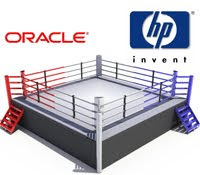
According to a filing by HP in a dispute with Oracle over the porting of its software to the Itanium platform, HP stated that Oracle had gone with an aggressive strategy against HP's Itanium servers after sales of competing Sun's Sparc servers have dropped considerably. In addition to that, HP stated that Oracle executives believed that the 2010 acquisition of Sun Microsystems was a mistake. Oracle announced back in 2011 that it would not support HP's Itanium platform on future products, which marked the latest move by the company that made running software on the HP platform more expensive. HP also submitted the filing to the Superior Court of the State of California, Santa Clara County, in opposition to Oracle's motion for summary adjudication.
Oracle decided not to support servers running the Itanium processors due to the fact that the processors were nearing the end of their life. When Oracle made this move, HP decided to sue because HP uses the chip in its high-end servers. Oracle CEO Larry Ellison made the decision not to port the software, a decision that was only shared with a few Oracle executives. Not even Oracle's Senior Vice President of Database Development was consulted on the issue.
Last month HP filed for a pretrial ruling that Oracle is contractually required to offer future versions of its software on the Itanium platform and claimed that an agreement between Intel and HP ensured that the Itanium was not an end-of-life processor. Oracle, on the other hand, stated that HP fraudulently induced it to enter into the agreement, stating that the company withheld information that it was secretly paying Intel $88 million per year to artificially continue the Itanium processor's life span.
The most recent filing points out that Intel had refuted Oracle's claims regarding the supposed end-of-life of the Itanium platform. A testimony from the Intel Executive in charge also made it clear that, "far from being near its demise, Itanium had just gained new vitality when Oracle made its announcement."
Oracle's internal sales communications shows the real reason the company decided to drop support for Itanium. The sales force was exhorted to take full advantage of the Itanium announcement according to the new filing, which quoted a sales executive from Oracle saying that, "we are the ones dictating IT/Itanium obsolescence."
According to a statement from HP, "This new information that has come up during the discovery period further underscores Oracle's behavior as 'anti-customer'. It reinforces the fact that Oracle breached its contractual agreement with HP in a bad faith attempt to drive hardware sales from Itanium to Sun servers." Deborah Hellinger, spokeswoman for Oracle, declined to comment on the filing.
Source: Computer World - HP: Oracle executives believed Sun acquisition was a mistake
Labels:
HP,
HP Itanium,
Intel,
Itanium,
Oracle,
Sun Microsystems
Friday, November 25, 2011
Intel Debuts Pentium 350 Chip for Low-End Servers
Intel, the most widely renowned and largest computer chip manufacturer on the planet, has just introduced a brand new, low-power Pentium 350 processor which is specifically aimed at low-end servers. The company had talked previously about its intentions to move into the low-end server market by producing "server versions" of the Atom processor which would support technologies like ECC memory.However, Intel has taken that idea and done something that simply has most tech industry professionals scratching their heads. Intel has gone ahead and jumped right into the market, though with a Pentium branded processor instead of an Atom. The processor the company has decided to use? The dual-core 1.2GHz Pentium 350.
Even though the Pentium brand from Intel is extremely well known, the company has relegated it to cut down processors, effectively taking the place of the company's Celeron processors. Regardless, the Pentium 350 supports Hyperthreading and, most importantly, has a thermal design power (TDP) of only 15W.
What makes the Intel Pentium 350 processor a server-oriented chip is the complete lack of an on-chip GPU and support for ECC memory with the memory controller supporting two channels. In addition to that, there is support for Intel's Vpro virtualization technology, presumably meaning that the Pentium 350 chip was designed for very specific and traditional workloads.
The Xeon range of processors from Intel currently dominates the commodity server market, though the company needs to start producing lower power chips to compete with ARM-based servers in the future. It was expected that Chipzilla would serve the low-end server market with an Atom processor, but for now the 15W Pentium chip will have to take its place until 22nm Atom chips begin coming off of Intel's production lines sometime next year.
Source: The Inquirer - Intel outs 15W Pentium 350 chip for servers
Computers, Desktops, Laptops, Servers and the latest in Portable Tablet PCs are available from your computer rental company, Rentacomputer.com.
Talk to a Rentacomputer.com Tech Travel Agent Today!
Call Toll free 800-736-8772.
Labels:
Atom,
Celeron,
Chipzilla,
Intel,
Intel Pentium 350,
low-end servers,
Pentium,
Pentium 350,
processors
Saturday, June 11, 2011
HP Not Letting Oracle Drop Itanium Support Without A Fight
So, if you haven't already heard, HP has no plans of letting Oracle off the hook for supporting Itanium. Oracle publicly announced back in March that it was officially discontinuing support of Oracle applications running on HP's Intel Itanium powered servers.Jump forward three months and HP is starting to fight back by claiming that Oracle has a legal obligation to continue supporting Itanium. According to a statement made by HP, "HP believes that Oracle's March 22 statement to discontinue all future software development on the Itanium platform violates legally binding commitments Oracle has made to HP and the more than 140,000 shared HP-Oracle customers. Further, we believe that this is an unlawful attempt to force customers from HP Itanium platforms over to Oracle's own platforms."
HP has sent Oracle a formal legal demand letter telling the company that it needs to reverse its decision on abandoning Itanium. "HP believes that Oracle is legally obligated to continue to offer its software product suite on the Itanium platform and we will take whatever legal actions are available to us necessary to protect our customers' best interests and the significant investments they have made," HP stated.
Oracle, back in March, made numerous claims that HP apparently disagreed with. Not only did Oracle announce publicly that the company was discontinuing support for HP's Itanium but they also claimed that Intel was hopping on board and doing the same thing. According to Oracle, "Intel management made it clear that their strategic focus is on their x86 microprocessor and that Itanium was nearing the end of its life."
The unfortunate thing, for Oracle at least, is that both HP and Intel are refuting Oracle's claims. According to HP, "HP remains committed to a long-term mission-critical server roadmap, including Intel's Itanium processor. Similarly, Intel has repeatedly reinforced its ongoing commitment to the Itanium roadmap."
While HP is going after Oracle for Itanium support, other vendors have already begun abandoning the platform. Microsoft announced back in April of 2010 that it was ending support for Itanium. Will HP win out over Oracle or will Oracle's claims that Intel is dropping Itanium as well come true?
Source: Server Watch - HP Demands Oracle Support Itanium
Whether you need a short-term rental or a long-term lease, we have the right kind of server for your needs.
Labels:
HP,
HP Itanium,
Intel,
microsoft,
Oracle,
Oracle dropping Itanium support
Friday, March 18, 2011
Facebook Combines Microserver Technology with Server Virtualization
Here's something interesting for you. Facebook is using a hybrid server virtualization as well as Intel's microserver technology in order to make the continued expansion of the social networking god more cost effective.According to the Research Lab Director of Facebook Gio Coglitore, "The firm has already been trailing in new microserver technology and is interested in leveraging the benefits of the solution in its substantial data centers."
One of the keys to the popularity of the single-processor server hardware is the fact that it can be packed more densely which offers more processing power per square inch than traditional server solutions.
"We found in our testing that a realized environment brings efficiencies and the ability to scale more effectively," Coglitore said. "If virtualization was the right approach, we would be a virtualized environment."
Coglitore concluded that virtualization was, indeed, an excellent solution but can become very difficult to manage at a very large scale. Intel introduced their microserver technology back in 2009 where it received high praise from fans and users. The technology has also landed some big clients since then including Dell, Seamicro and Tyan.
Source: onestopclick - Facebook mixes server virtualization with microserver technologies
Labels:
Facebook,
Gio Coglitore,
Intel,
microserver,
Servers,
Virtualization
Friday, September 3, 2010
Intel's Xeon 5600-Series Server Processor
The only problem with this is that servers and workstations were already using multi-socket configurations to get things moving faster. At this point, Intel's Xeons were getting royally beaten by the Operton from AMD. The Xeons were single-core processors in dual-processor boards that were only slightly aided by the same Hyper-Threading technology we know of today.
It is true that the incorporation of threaded software has been slow for the desktop market whereas business-class workstations have been enjoying multi-core CPUs for quite some time. The cost savings of switching from a single-core, dual-socket system to a dual-core, single-socket box is intense.
As hardware gets more and more powerful, software changes to take advantage, necessitating even more capable hardware. Intel launched their Xeon 5500-series CPUs for dual-socket servers and workstations. The 5500-series was characterized as the most important introduction in more than a decade, and it definitely was for Intel.
AMD had an architectural advantage by using HyperTransport, which was especially pronounced in multi-socket machines. On the other side you had Intel, who still relied on shared front side bus bandwidth for processor communication. With the introduction of the 5500-series, Intel addressed their weakness via QuickPatch Interconnect which added Hyper-Threading and Turbo Boost to help improve performance in parallelized and single-threaded applications.
But Intel wasn't finished yet. This year's switch to 32 nm manufacturing allowed Intel the opportunity to add complexity to their SMB-orientated processors without altering the thermal properties. This is where the Xeon 5600-series comes into play, which supports up to six physical cores and 12MB of shared L3 cache per processor all within the 130W envelope that was created by the 5500-series.
Intel has announced that the latest 5600-series is not a contender in the workstation market right now. In order to be competitive in that market, Intel would have to pair competent processors with no less than fairly-modern core logic. Regardless, there is still plenty of hardware to compare, including a Core i7-980X. The Xeon 5600-series Server Processor is on sale now for a hefty $1,700 and is definitely one of the best servers on the market today.
Looking for other Technology Rental information? Visit the Tech Travel Site Map for a variety of computer and technology rental ideas.
Thursday, April 15, 2010
x86 Server Market Directs Microsoft to End Itanium Development
Microsoft has announced that it will no longer support development for Intel's Itanium processor effectively placing current Itanium products into maintenance status for the next three years with support ending entirely in eight years. Microsoft also stated that the current versions of Windows Server 2008 R2, SQL Server 2008 R2, and its developer tool Visual Studio 2010 will be the last versions to support the Itanium architecture. For those wondering exactly why Microsoft would make this move, Joe Clabby, President of Clabby Analytics, offers his thoughts on the decision."Here's what really happens: Microsoft has invested in x86 architecture. People don't want Windows on Itanium. They want HP-UX on Itanium and maybe some NonStop and OpenVMS, but they have not done jumping jacks over Windows on Itanium. Microsoft is saying its committing heart and soul to x86 multicore and that's what the market wants,"
While the move is yet another blow to the Itanium line, losing Microsoft is not as painful as one would think. Approximately 80 percent of Itanium sales are from HP, which runs HP-UX, NonStop or OpenVMS. Windows and Unix are merely a small portion of their business. However, the marketplace continues to gravitate towards the architecture proposed by Advanced Micro Devices, which added 64-bit extensions to the x86 processors used by many mainstream servers and PCs. Although Microsoft has offered 64-bit versions of Windows Server for both types of chips, the x64 versions have proven to be far more popular than the Itanium ones. Microsoft's reasoning for the decision seems to be sound.
"The natural evolution of the x86 64-bit ('x64') architecture has led to the creation of processors and servers which deliver the scalability and reliability needed for today's 'mission-critical' workloads," Reger said in a blog post. "Just this week, both Intel and AMD have released new high core-count processors, and servers with eight or more x64 processors have now been announced by a full dozen server manufacturers. Such servers contain 64 to 96 processor cores, with more on the horizon."
Despite waning mainstream support and the fact that Itanium has never been a big seller, the chip remains as an importance figure in the market seeing as its the processing power backing HP's high-end server line. In addition, Intel continues to develop new versions of the processor, most recently the Itanium 9300 which was introduced in February, and has promised at least two more generations codenamed "Poulson" and "Kitson". While the immediate future seems secure for the Itanium series of processors it remains to be seen just how far they will be able to go.
Looking for a deal on a file server just back from rental? Check out the just back from rental computer inventory at www.rentacomputer.com or call 800-736-8772 today!
Subscribe to:
Posts (Atom)